
Learning & Development · November 16, 2026
What should Quebec Law 25 and bilingual staff training cover?
 Romain Gagnon · November 16, 2026 · Founder & CEO
Quick answer
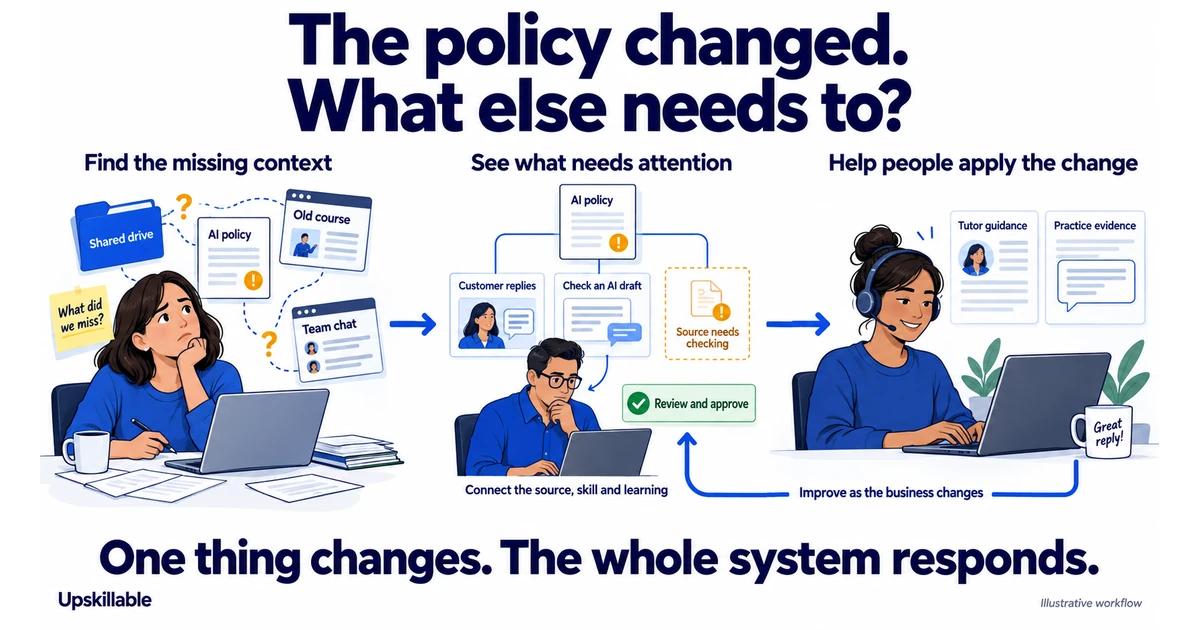
Effective Quebec Law 25 and bilingual workplace training prepares staff on personal-information handling, consent, incident reporting, and retention schedules in both French and English, and keeps the training synchronized whenever your privacy policy changes rather than freezing rules inside stale SCORM slides.
Key facts for Quebec and Canadian employers
- Privacy training expectation (Quebec Law 25): Organizations must establish and publish governance policies and practices ensuring the protection of personal information, including training and awareness obligations overseen by the Privacy Officer (Act respecting the protection of personal information in the private sector, CQLR c. P-39.1; Commission d'acces a l'information du Quebec).
- Federal private-sector privacy (PIPEDA): Accountability and safeguard principles under PIPEDA require employee awareness of confidential data handling alongside organizational security measures.
- Workplace language parity (Bill 96): The Charter of the French Language (CQLR c. C-11) establishes workers' rights to receive workplace communications, training documents, and tools in French alongside any English versions used across wider North American teams.
- Operational gap: Building French and English compliance courses twice in separate static packages doubles instructional labor on every policy update.
Note: This guide covers learning operations and instructional workflows, not legal advice. Confirm statutory obligations and regional policy scope with qualified Quebec or Canadian privacy counsel.
What Law 25 and bilingual workplace training should cover
Employees rarely fail privacy rules out of bad intent. Incidents happen when an HR coordinator forwards an unencrypted candidate spreadsheet, a sales rep exports CRM notes to a public AI chat window, or a branch supervisor cannot locate the Privacy Officer reporting path within an hour.
Practical Law 25 and PIPEDA onboarding focuses on four role-specific behaviors:
- Recognizing personal and sensitive data in daily tools: Customer records, employee HR files, support transcripts, and health or banking fields inside email, shared drives, and SaaS apps.
- Least-privilege collection and retention: Asking only for required data, respecting stated purposes, and avoiding indefinite local copies on laptops.
- Approved AI and SaaS boundaries: Knowing which assistants and workspaces prohibit model training and where pasting confidential customer records violates internal rules.
- Fast incident escalation: Who the designated Privacy Officer is, what triggers an internal report immediately, and how confidentiality incidents are documented.
Why static dual-SCORM workflows break on policy updates
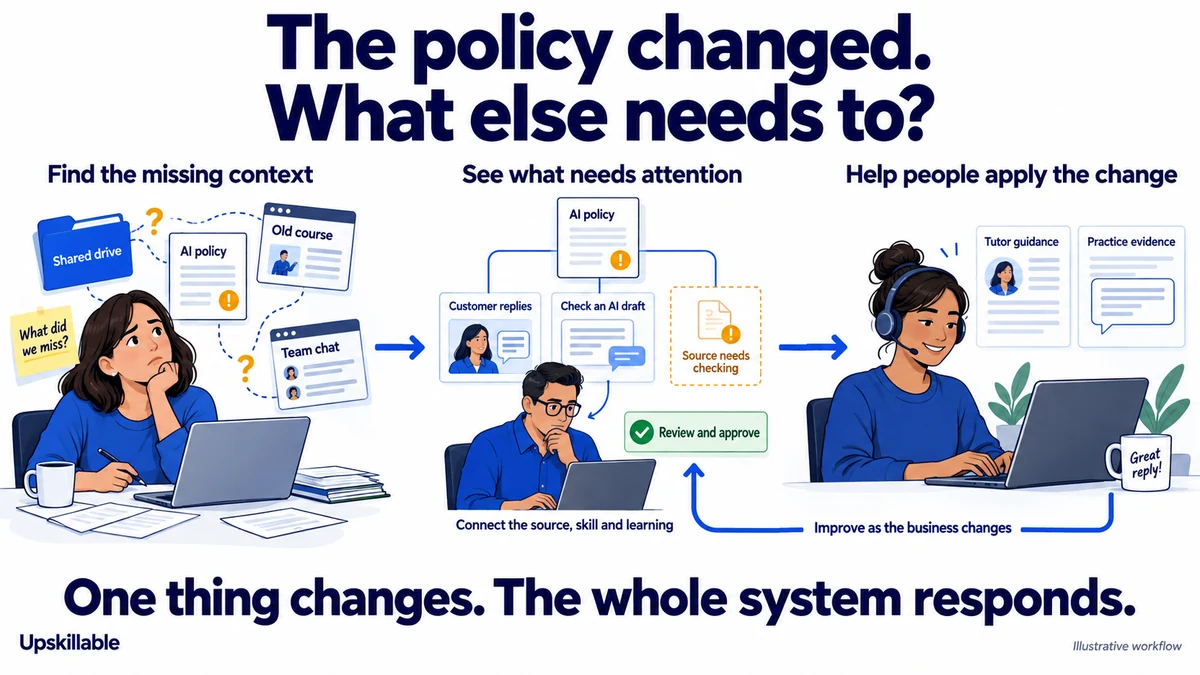
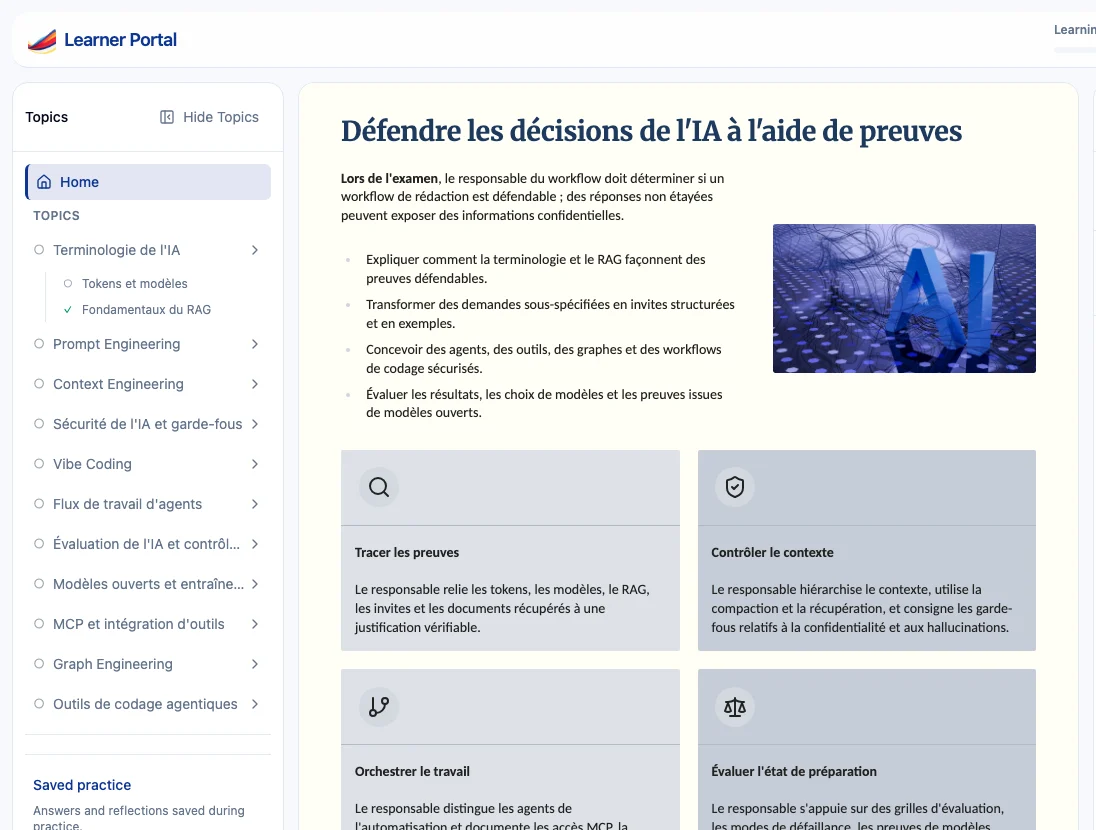
When teams manage French and English training using traditional point authoring tools and static ZIP packages, every minor change in retention rules or subprocessor lists turns into a multi-week rebuild across two disconnected files. An AI-native LCMS with source traceability removes that rework by keeping translated lessons connected to one reviewed policy source.
| Workflow step | Static Dual-SCORM Authoring | Source-Grounded Bilingual Living Courses |
|---|---|---|
| Source policy change | Teams notice a PDF update weeks later and hunt manually for which EN and FR SCORM modules cite the old clause. | Generate Studio and Truth Ledger track claims and quiz items back to source sections so authors inspect only the affected lessons. |
| French and English authoring | Build English course first, export XLIFF or duplicate slides, re-record narration, and debug layout breaks separately in French. | Generate interactive Living Courses, job-aid SOPs, and voice/avatar clips from one brief, then localize with terminology memory and human review. |
| On-the-job questions | Staff leave the LMS to search policy PDFs or ask public AI tools when handling an unfamiliar customer request. | The in-course AI Coach answers in the learner's language strictly inside approved course material and role rules. |
| Audit and LMS compatibility | Export new ZIP packages and hope completed learners notice a subtle policy revision buried in release notes. | Deliver natively in Upskillable or push updated modules cleanly to an existing LMS via LTI 1.3 or SCORM 1.2 export. |
A 5-step rollout from internal policy to bilingual Living Course
Replacing manual dual-language maintenance starts with structuring the workflow around the source policy itself rather than isolated slides:
- Upload your approved privacy and IT policy documents: Bring your English or French privacy handbook, subprocessor rules, and incident playbook into Generate Studio.
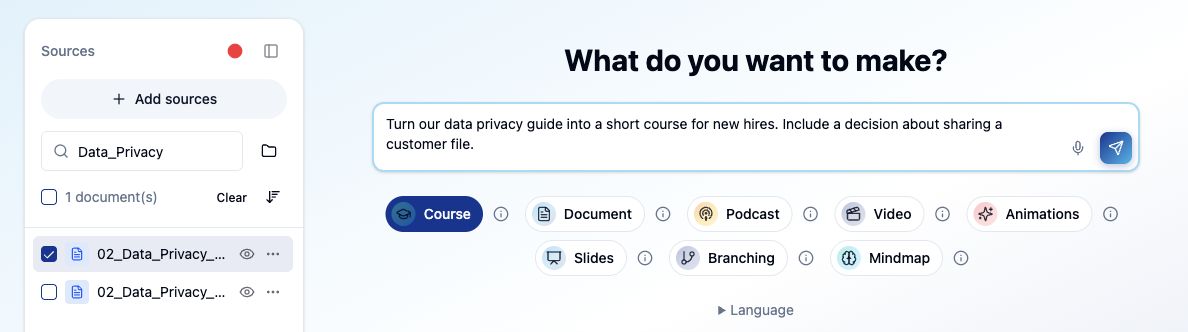
- Build role-based decision practice instead of generic text: Create targeted scenarios for HR, customer support, sales, and managers alongside a short printable reference SOP.
- Localize cleanly with terminology governance: Translate lessons and assessments between French and English using consistent legal/company terms, reviewed by a bilingual owner before release.
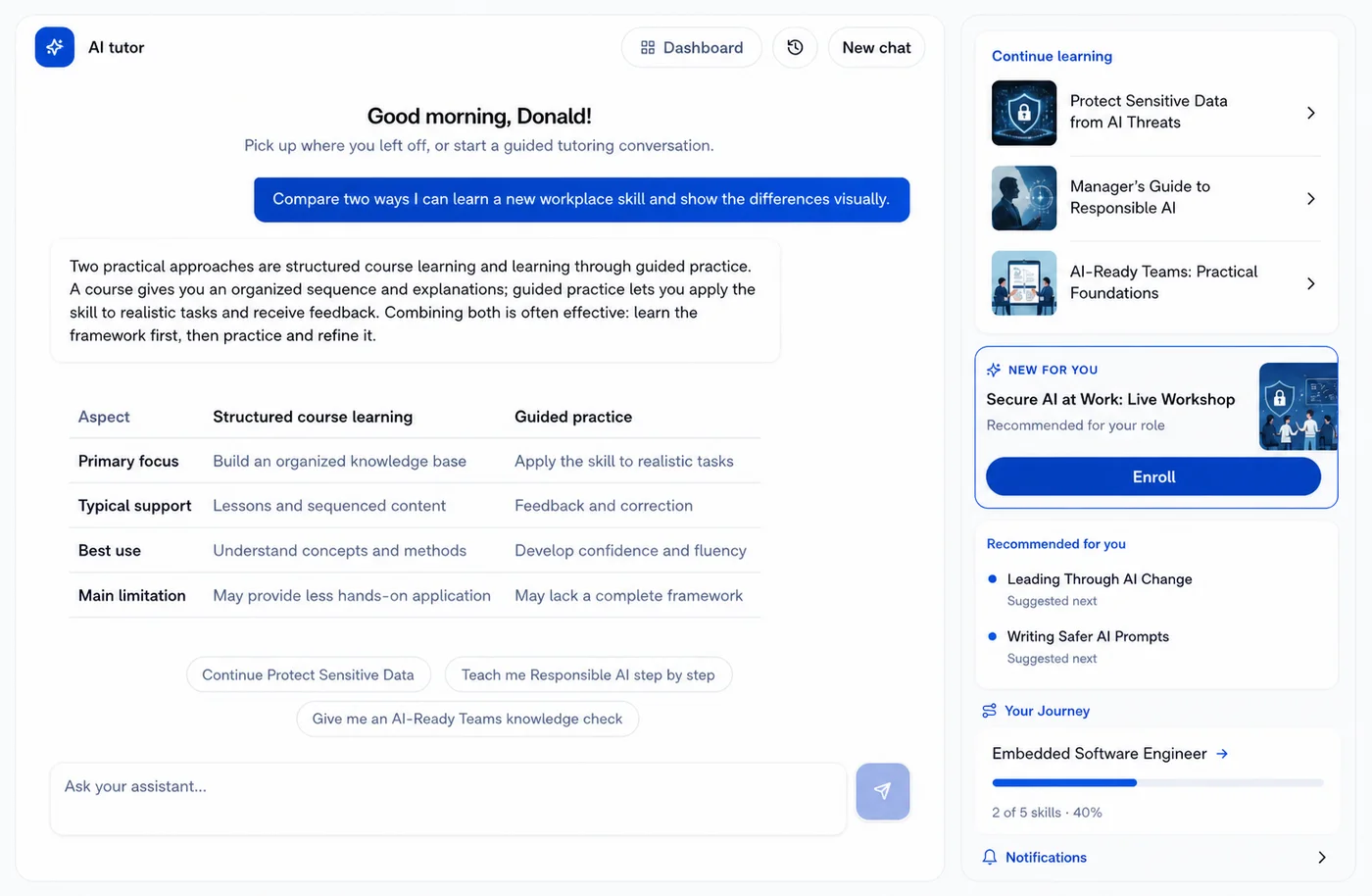
- Give employees an in-course AI Coach in their working language: Ground learner Q&A strictly in released policy lessons rather than open-web answers.
- Deploy where teams already learn: Run natively in Upskillable with skills evaluation and renewal tracking, or launch directly inside your current corporate LMS through LTI 1.3 and SCORM 1.2.
Privacy governance, hosting transparency, and how to evaluate platforms
Before selecting an LMS or compliance training platform, check both your legal residency requirements and your team's maintenance reality. Upskillable supports contractual Quebec Law 25 and PIPEDA commitments in its Data Processing Addendum (Privacy & Law 25) with PostgreSQL row-level tenant isolation and no AI model training on customer data, while hosting primary database and file infrastructure in AWS US-East (Security overview). If your legal policy strictly mandates Canadian physical server residency, verify regional hosting in writing with your security team first. See our bilingual French and English AI authoring guide for the end-to-end authoring workflow.
Want to test how quickly your own bilingual SOP or privacy policy turns into an editable English and French course? Send us a quick note with one use case and we will walk through the exact setup on a live pilot.
Frequently asked questions
What topics should Quebec Law 25 staff privacy training include?
Focus on recognizing personal and sensitive data in daily tools, purpose-limited collection and retention, approved AI tool boundaries, and immediate escalation paths to your designated Privacy Officer.
How does bilingual French and English authoring reduce compliance update lag?
Source-grounded AI authoring keeps French and English lessons linked to one approved policy document and terminology memory so teams review and release changes quickly without rebuilding two SCORM files from scratch.
Does Upskillable offer Canadian server residency or Law 25 DPA terms?
Upskillable hosts primary PostgreSQL and S3 storage in AWS US-East and supports Quebec Law 25 and PIPEDA contractual commitments inside its Data Processing Addendum (DPA) with strict row-level tenant isolation and no shared model training.
Can we export bilingual courses to an existing LMS?
Yes. Teams can launch Living Courses alongside their current LMS through LTI 1.3 or export authored courses as standard SCORM 1.2 packages.
Connect with us
Tell us what you are trying to get done.
This form reaches the Upskillable team. It is not a public comment thread. Prefer the longer path? Use Get started.
Prefer email? Reach us at hello@upskillable.ai.
Keep reading
Comparisons
Upskillable vs Articulate 360: Storyline, Reach & Localization compared
Compare the full Articulate 360 suite (Rise, Storyline, Review, Reach, Localization) against Upskillable on browser authoring, bilingual updates, AI Coach, and LMS delivery.
Romain Gagnon · November 17, 2026
AI Authoring
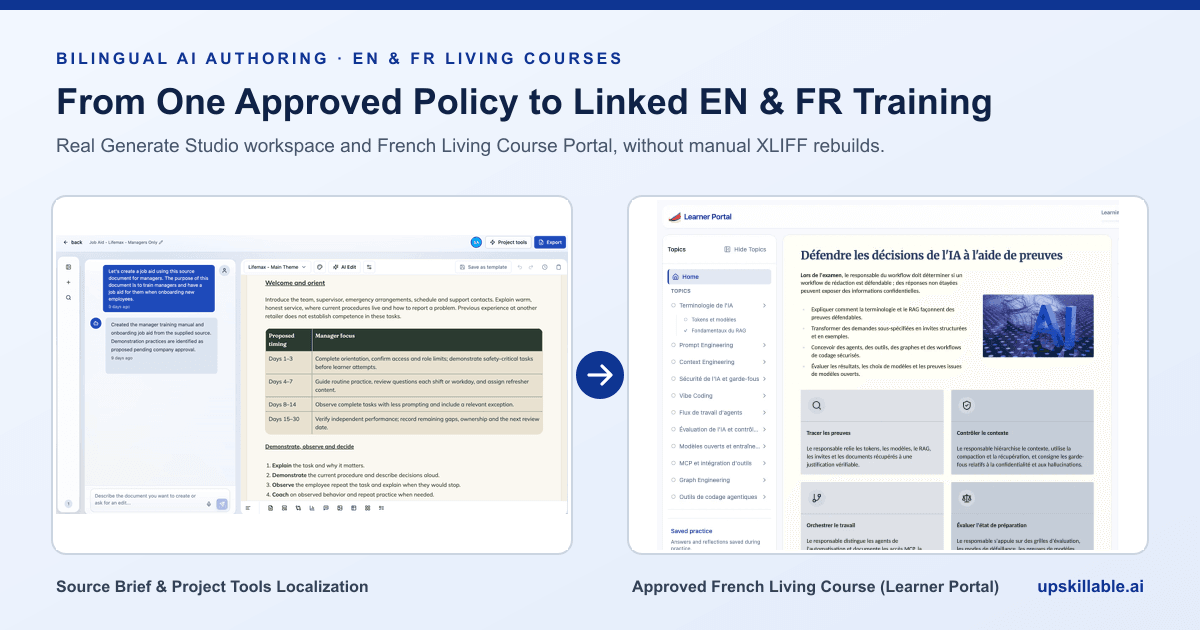
How to author bilingual French and English training without XLIFF rebuilds
Replace slow manual XLIFF handoffs and duplicated EN/FR SCORM packages with source-grounded Generate Studio localization, terminology memory, and human approval.
Romain Gagnon · November 17, 2026